Table of Contents
As our feline companions gracefully enter their golden years, their once-vigorous appetites and eating habits often undergo subtle but significant changes. Senior cats—typically those aged 11 and older—face unique challenges ranging from reduced mobility and dental sensitivity to chronic conditions requiring precise medication timing. For devoted cat parents juggling busy schedules, ensuring consistent, appropriately-portioned meals can become a daily source of anxiety. Automatic cat feeders have evolved from simple convenience gadgets into essential caregiving tools, but not all models address the nuanced needs of aging cats. The right feeder can mean the difference between a thriving senior and one struggling with weight loss, missed medications, or mealtime stress.
In 2026, the market offers sophisticated solutions designed specifically for geriatric felines, blending veterinary science with smart technology. This comprehensive guide cuts through marketing fluff to examine what truly matters when selecting an automatic feeder for your senior cat. We’ll explore the intersection of feline gerontology and feeder engineering, helping you identify features that support joint health, accommodate diminished senses, and integrate seamlessly with complex feeding schedules. Whether you’re managing kidney disease, diabetes, or simply want to preserve your cat’s independence, understanding these critical factors will empower you to make an informed decision that enhances your senior cat’s quality of life.
Top 10 Automatic Cat Feeders For Senior
Detailed Product Reviews
1. oneisall Automatic Cat Feeder with 5G WiFi, Automatic Cat Food Dispenser for 2 Cats Small Pets, 20 Cups/5L Timed Dry Food Dispenser with APP Control

Overview:
The oneisall Automatic Cat Feeder integrates advanced 5G WiFi connectivity with a substantial 5-liter capacity, targeting tech-savvy owners of multiple cats. This app-controlled dispenser supports scheduled and manual feeding while storing 20 cups of dry food—enough for two adult cats for 10 days. The system includes family sharing functionality and a 10-second voice recorder for personalized meal calls, making it vacation-ready.
What Makes It Stand Out:
Dual-band 5G/2.4G WiFi distinguishes this feeder from 2.4G-only competitors, ensuring stable remote access when you’re away. The family sharing feature enables collaborative pet care among household members, while detailed feeding logs provide transparency. The voice recording adds an emotional dimension, calling pets with your familiar tone at each meal. These features create a comprehensive remote care ecosystem.
Value for Money:
Positioned in the mid-to-premium tier, this feeder justifies its cost through connectivity reliability and vacation-length capacity. For frequent travelers, the 5G stability prevents costly missed feedings that might require emergency pet care. While pricier than basic models, it eliminates pet-sitting expenses for short trips, offering long-term savings.
Strengths and Weaknesses:
Pros: Stable 5G/2.4G WiFi; large 20-cup capacity; family app sharing; voice recording; detailed logs; 10-day multi-pet coverage
Cons: Smartphone-dependent; 5G requires compatible home network; overkill for single pets; higher price than non-WiFi alternatives
Bottom Line:
Excellent for multi-pet households and regular travelers prioritizing connectivity reliability. The 5G feature future-proofs your investment, though owners with simple needs may find better value in less advanced models.
2. Yuposl Automatic Cat Feeders - 2L Cat Food Dispenser Easy to Use, Timed Automatic Pet Feeder with Over 180-day Battery Life, 1-6 Meals Dry Food Programmable Portion Control Also for Dogs
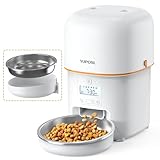
Overview:
The Yuposl Automatic Cat Feeder emphasizes simplicity and battery-powered reliability with an extraordinary 180-day lifespan on three D-size batteries. Its 2-liter capacity suits one or two pets for shorter periods. Operating without WiFi, it uses an LCD screen and intuitive buttons to schedule 1-6 daily meals with customizable portions. The feeder handles kibble from 2-15mm, accommodating dental diets that jam other dispensers effectively.
What Makes It Stand Out:
The remarkable 180+ day battery life eliminates cable clutter and outlet constraints, offering unmatched placement flexibility. A spring-lock lid and silicone sealing rotor create a formidable defense against food-stealing paws—a common frustration with other feeders. Its ability to dispense larger dental kibble without jamming addresses a critical market gap, ensuring consistent feeding regardless of food type.
Value for Money:
This budget-friendly feeder delivers exceptional value by eliminating subscription fees and WiFi dependency. The long battery life reduces operating costs, while the durable anti-theft design prevents food waste. Compared to smart models, it offers reliable performance at a fraction of the price, making it ideal for cost-conscious buyers who prioritize function over connectivity.
Strengths and Weaknesses:
Pros: 180+ day battery life; no WiFi needed; anti-paw security; handles large kibble; dual power options; compact; affordable
Cons: Smaller 2L capacity; no remote monitoring; LCD setup less convenient; batteries not included; limited to 6 meals/day
Bottom Line:
Perfect for owners seeking a no-fuss, reliable feeder without smartphone dependency. The exceptional battery life and anti-theft design make it highly practical, though those wanting remote control should consider WiFi-enabled alternatives.
3. IMIPAW Automatic Cat Feeder, 3L Timed Dry Food Dispenser with Desiccant, Programmable Portion Control, Dual Power Backup, 10 Meals Daily, 15 Portions Per Meal, Suitable for Small Pets, Easy Setup

Overview:
The IMIPAW Automatic Cat Feeder balances app connectivity with practical design in a 3-liter package. Controlled via the “PetNetizen” app, it schedules 1-10 meals daily with 1-15 portions per meal. The dual rotor structure prevents jamming while the six-compartment rotor ensures consistent portions. A dual power system and secure locking lid address reliability and pet-proofing concerns effectively for small pets.
What Makes It Stand Out:
Proximity control via app simplifies operation compared to complex button sequences on traditional models. The dual rotor mechanism and internal tilt angle create a jam-resistant dispensing system that maintains portion accuracy. The safety clasp locking system specifically targets cats who knock over or open feeders, while the sealed container with desiccant preserves food freshness exceptionally well.
Value for Money:
This mid-range feeder offers solid value for app-enabled convenience without premium pricing. The dual power backup prevents meal interruptions during outages, potentially saving emergency pet sitting costs. While not the cheapest option, its jam-resistant design reduces maintenance headaches and food waste, providing reliable performance over time.
Strengths and Weaknesses:
Pros: App-based scheduling; dual rotor anti-jam design; dual power backup; secure locking lid; sealed container with desiccant; 10 meals/day capacity
Cons: App remote control not supported (proximity only); 3L capacity moderate; D batteries not included; lesser-known app ecosystem
Bottom Line:
A reliable middle-ground option for owners wanting app convenience without complexity. The anti-jam design and security features make it cat-proof, though the lack of true remote control limits its appeal for frequent travelers.
4. Brioche Automatic Wet Food Feeder for Pets - True 6-Meal Cordless Fresh Can Dispenser with Two Ice Packs, Perfect for Newborn Senior Sick Cats and Small Dogs

Overview:
The Brioche Automatic Wet Food Feeder fills a specialized niche with its true 6-meal design for wet food, complete with ice packs to maintain freshness. This cordless unit runs on AA batteries for up to 180 days, making it ideal for short-term feeding of newborn, senior, or sick pets requiring scheduled wet meals. The time memory function eliminates daily reprogramming, serving one meal per day for six days automatically.
What Makes It Stand Out:
As one of few feeders designed specifically for wet food, it includes ice packs to prevent spoilage—a critical feature competitors lack. The 6-compartment tray serves pre-portioned meals for up to six days without reloading. Its 90% washable modular design and BPA-free tray prioritize hygiene, while the innovative lock prevents pets from accessing the control panel, ensuring safety.
Value for Money:
While priced higher than dry feeders, it fills an essential market gap. For pets requiring wet food medication or palatability, it eliminates the cost of daily pet sitters. The long battery life and durable construction justify the premium for owners of medically fragile pets who need reliable, fresh meal delivery consistently.
Strengths and Weaknesses:
Pros: Wet food compatible with ice packs; 6-day scheduling; cordless 180-day battery; washable modular design; panel lock; BPA-free materials
Cons: Limited to 6 meals total; smaller portions; requires ice pack freezing; not for extended vacations; higher price per capacity
Bottom Line:
Essential for pets needing scheduled wet food meals. The ice pack system and hygienic design make it unmatched for medical feeding, though dry-food-only households will find better capacity elsewhere.
5. Miaosical Automatic Cat Feeder,2.4G WiFi Timed Auto Cat Food Dispenser with 10s Voice Recorder,Dual Power Supply,4.2L Auto Cats Feeder(Black, 4.2L WiFi Single Bowl)

Overview:
The Miaosical Automatic Cat Feeder offers WiFi-enabled convenience through the Smart Life app in a 4.2-liter package. Supporting up to 10 meals daily with precise portion control for 2-15mm kibble, it balances capacity with connectivity for single-pet households. Dual power options and a 10-second voice recorder provide reliability and personalization in a sleek black design.
What Makes It Stand Out:
Integration with the widely-used Smart Life app ensures broad compatibility and regular updates compared to proprietary apps. The 4.2L capacity offers more storage than basic 2-3L models without the bulk of 5L+ units. The voice recorder adds emotional connection, while the locking lid maintains food freshness and prevents curious pets from accessing the reservoir, combining security with everyday convenience.
Value for Money:
This competitively priced WiFi feeder delivers strong value through app reliability and adequate capacity. The dual power system prevents missed meals during outages, avoiding costly emergency feeding solutions. While not the cheapest, it undercuts premium 5G models while maintaining essential smart features, making it accessible for most budgets effectively.
Strengths and Weaknesses:
Pros: Smart Life app integration; 4.2L capacity; dual power supply; voice recording; locking lid; handles various kibble sizes; easy-clean design
Cons: 2.4G WiFi only (no 5G); single bowl limits multi-pet use; batteries not included; app setup may challenge non-tech users; moderate multi-pet capacity
Bottom Line:
A solid WiFi feeder for single-pet households wanting app control without premium pricing. The Smart Life integration and reliable dual power make it practical, though multi-pet families should consider larger models.
6. Automatic Cat Feeder, 4L Cat Food Dispenser with 10s Voice Recorder, Pet Feeder up to 8 Meals per Day, Timed Dog Feeder with Dry Food Sealed Ring (White, 4L-Basic)

Overview: The 4L Automatic Cat Feeder addresses the most common frustration with automatic feeders: food jams. This basic-but-reliable model focuses on consistent dry food delivery with a specialized distribution system that prevents blockages, making it ideal for pet owners who prioritize dependability over high-tech features.
What Makes It Stand Out: The anti-jamming mechanism is the star here, featuring a food swinging device and 8-degree tilted bowl for smooth dispensing. The built-in desiccant box with included packet actively fights moisture and mold, while the pet-proof lid prevents food theft. Dual power options (adapter and 3 AA batteries) ensure continuous operation during outages, and the custom voice recorder plays your 10-second message three times at feeding.
Value for Money: This feeder sits in the budget-friendly range, offering core reliability features that cheaper models often lack. While it doesn’t include WiFi or a camera, its sophisticated mechanical anti-jam system and freshness preservation justify the modest price premium over entry-level dispensers that frequently clog.
Strengths and Weaknesses: Strengths: Reliable anti-jam design; desiccant box for freshness; dual power supply; 10-second voice recorder plays 3 times; 8-meal scheduling; pet-proof lid. Weaknesses: No app connectivity or remote monitoring; basic LCD screen; limited to 8 meals daily; dry food only; no portion size specification.
Bottom Line: For pet owners seeking a dependable, no-fuss automatic feeder that simply works without connectivity concerns, this model delivers excellent reliability. It’s perfect for weekend getaways or daily routine feeding where technology would be overkill.
7. iPettie Brioche Automatic Wet Food Feeder for Pets with Two Ice Packs, Perfect for Newborn Senior Sick Cats and Small Dogs, Stainless Steel and PlasticTray

Overview: The iPettie Brioche breaks the dry-food-only barrier with its innovative wet food compatibility. Designed specifically for pets with special dietary needs—newborns, seniors, or sick cats and small dogs—this feeder includes two ice packs to keep perishable food fresh for up to six days of single-daily meals, solving a major gap in automatic feeding.
What Makes It Stand Out: This is one of the few automatic feeders that genuinely accommodates wet food without mess or spoilage. The dual stainless steel and plastic tray system ensures durability and easy cleaning, while the pet-proof lock keeps clever paws from accessing meals ahead of schedule. The 12/24-hour format flexibility simplifies programming for any routine.
Value for Money: While pricier than basic dry feeders, this model serves a niche market with no true direct competition. The ability to safely dispense wet food eliminates costly waste and ensures medication can be mixed into meals, potentially saving veterinary bills for pets with specific nutritional requirements that demand fresh, moist food.
Strengths and Weaknesses: Strengths: Wet and dry food compatible; ice packs for freshness; stainless steel + plastic trays; pet-proof lock; 6-meal capacity; simple scheduling. Weaknesses: Only 6 meals total capacity; no voice recorder; no camera or app; limited to one meal per day over 6 days; requires regular ice pack freezing.
Bottom Line: For pet owners managing special diets requiring wet food, this feeder is invaluable. It sacrifices high-tech features for practical functionality, making it essential for medical feeding schedules rather than convenience-driven owners seeking remote monitoring.
8. oneisall Automatic Cat Feeder for 2 Cats, 20 Cups/5L Automatic Cat Food Dispenser for Small Pets Indoor, Timed Cat Feeder for Dry Food

Overview: The oneisall Automatic Cat Feeder solves multi-pet household conflicts with its clever dual-bowl design. Tailored specifically for two cats, this 5L dispenser positions bowls 11 inches apart, preventing food guarding and ensuring equal portions without competition or stress during mealtimes.
What Makes It Stand Out: The opposing bowl configuration is a standout innovation for dual-cat homes, eliminating queueing and fights. The dial-based programming simplifies setup for non-tech-savvy users, while the generous 20-cup capacity provides ten days of feeding for two adult cats. The 10-second voice recorder adds a personal touch, and precise 10-gram portion control ensures dietary accuracy.
Value for Money: This feeder occupies a sweet spot between basic models and high-tech options. Its specialized two-cat design justifies the moderate price point, offering capacity and peace of mind that would require two separate single feeders otherwise, saving both money and space.
Strengths and Weaknesses: Strengths: Dual-cat design with 11-inch spacing; large 5L/20-cup capacity; simple dial programming; voice recorder; precise 10g portions; up to 6 meals daily. Weaknesses: No camera or app connectivity; dry food only; no backup battery mentioned; limited to 6 meals; may not suit cats who eat at different schedules.
Bottom Line: Perfect for two-cat families seeking straightforward, reliable feeding without smartphone dependency. It eliminates mealtime tension while providing ample capacity for vacation feeding, making it a practical, specialized solution.
9. Frienhund Automatic Cat Feeder with 2K Camera: 5G WiFi Automatic Dog Feeder with Night Vision,Cat Food Dispenser with 7L Large Food Storage Container for Multiple Pet,Detachable for Easy Clean -29 Cup
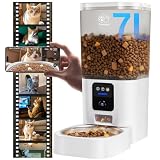
Overview: The Frienhund Automatic Cat Feeder represents the premium tier of smart pet care, combining a massive 7L capacity with a 2K camera and dual-band WiFi. This feeder transforms remote pet monitoring into a comprehensive experience, allowing owners to watch, talk to, and adjust feeding from anywhere via a robust mobile app.
What Makes It Stand Out: The 2K camera with night vision and motion detection sets a new standard, capturing clear footage stored via TF card or cloud. Dual-band WiFi (2.4GHz & 5GHz) ensures stable connections without router compromises. The system supports up to 15 meals daily with 20 portions each, while two-way audio with volume adjustment accommodates sound-sensitive pets.
Value for Money: Positioned at the high end, this feeder justifies its premium price through superior camera quality, flexible connectivity, and advanced app features. It replaces separate feeder and pet camera systems, offering consolidation that tech-focused owners will appreciate.
Strengths and Weaknesses: Strengths: 2K camera with night vision; dual-band WiFi; motion detection; massive 7L capacity; up to 15 meals daily; two-way audio; TF card/cloud storage; app control. Weaknesses: Premium pricing; potentially complex setup for non-tech users; may be feature-overkill for simple needs; cloud storage likely requires subscription.
Bottom Line: For tech-savvy pet owners wanting maximum oversight and interaction, this is the ultimate solution. The exceptional camera and connectivity features make it worth the investment for those who travel frequently or simply love monitoring their pets in high definition.
10. PAPIFEED Automatic Cat Feeder 6L 2.4G WiFi Smart Pet Feeder with Camera & Two-Way Audio, Adjustable Angle, Easy to Clean Detachable Feeding Schedule 1-10 Meals Per Day for Cats & Small Dogs - Black
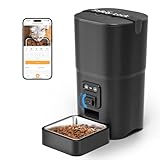
Overview: The PAPIFEED Automatic Cat Feeder balances smart features with practical design in a sleek black package. This 6L WiFi-enabled dispenser includes a 480P adjustable camera, two-way audio, and thoughtful hygiene features, positioning itself as a mid-range option for owners wanting connectivity without premium pricing.
What Makes It Stand Out: The manually adjustable camera angle allows custom viewing perspectives, while Bluetooth setup simplifies initial connection. The BPA-free, dishwasher-safe detachable container and stainless steel bowl prioritize hygiene. Dual power supply with 15-hour battery backup ensures reliability during outages, and the custom voice message feature adds personal comfort for pets.
Value for Money: This feeder offers excellent value by bundling camera monitoring, app control, and hygienic design at a moderate price point. While the 480P camera lacks night vision, it provides essential visual confirmation that budget models miss, without reaching premium price levels.
Strengths and Weaknesses: Strengths: Adjustable 480P camera; Bluetooth + WiFi setup; two-way audio; dishwasher-safe components; dual power supply; custom voice recording; app scheduling (1-10 meals). Weaknesses: 480P resolution is low; no night vision; 2.4GHz WiFi only; limited battery backup (15 hours); camera quality inferior to premium models.
Bottom Line: A solid choice for owners seeking smartphone control and visual check-ins without breaking the bank. It successfully bridges the gap between basic timers and high-end surveillance feeders, making it ideal for first-time smart feeder buyers.
Understanding Senior Cats’ Unique Nutritional Needs
Aging fundamentally alters feline metabolism and digestive efficiency. Senior cats experience a natural decline in their ability to digest protein and fat, meaning nutrient density becomes paramount. Their sense of smell and taste often diminishes, which can reduce food interest at precisely the time when maintaining body condition is most critical. Unlike younger cats who graze effectively, seniors benefit from smaller, more frequent meals that prevent overwhelming their digestive system while stabilizing blood sugar.
The ideal automatic feeder for senior cats must accommodate these physiological shifts. Look for models offering multiple daily feeding cycles—ideally 4-6 small portions rather than 2-3 large meals. This mimics natural feline feeding patterns while respecting an aging digestive tract’s limitations. Additionally, consider how the feeder preserves food aroma, as scent is a primary appetite stimulant for cats experiencing sensory decline.
Why Traditional Feeding Methods Fail Aging Cats
Free-feeding, once adequate for your cat’s younger years, becomes problematic as they age. Bowls left out all day allow food to stale, losing the aromatic appeal seniors desperately need. More critically, it prevents monitoring intake—a crucial diagnostic window for early disease detection. Manual feeding schedules, while attentive, create dependency that can be problematic if you’re delayed by work, travel, or emergencies.
For cats with arthritis, reaching down to floor-level bowls causes joint strain and discomfort, often leading them to skip meals entirely. Cognitive dysfunction syndrome, affecting over 50% of cats over 15, can disrupt their internal clock, causing them to forget when meals typically occur. Traditional methods simply cannot provide the consistency and accessibility that aging cats require to maintain healthy eating patterns.
How Automatic Feeders Transform Senior Cat Care
Modern automatic feeders function as silent caregiving partners, delivering precision that supports veterinary treatment plans. They eliminate the stress of missed meals, which can trigger hepatic lipidosis in seniors who go even 24-48 hours without eating. By providing exact portions, they combat obesity—a major factor in exacerbating arthritis and diabetes—while preventing underfeeding in cats with hyperthyroidism or other conditions causing increased appetite.
The psychological benefit is equally profound. Seniors thrive on routine, and automatic feeders establish predictable mealtime cues that can anchor a disoriented cat’s day. This consistency reduces anxiety and can even improve sleep-wake cycles in cats with cognitive decline. The best feeders become environmental enrichment tools, restoring a sense of control and anticipation around meals.
Key Features That Matter Most for Senior Cats
Portion Precision: The Foundation of Healthy Aging
Veterinary nutritionists emphasize that portion accuracy within 1-2 grams is non-negotiable for senior cats. Inconsistent portions wreak havoc on diabetic cats requiring insulin coordination, while overfeeding accelerates degenerative joint disease. Seek feeders with auger or conveyor systems rather than gravity-based dispensing, as these mechanisms measure each serving mechanically rather than estimating by volume.
The programming interface should allow fractional portions—some seniors need as little as 5-10 grams per feeding to maintain stable blood glucose. Test the feeder’s accuracy by weighing dispensed portions across multiple cycles before trusting it with your cat’s health. Remember, a feeder that varies by 20% might be acceptable for a young active cat but dangerous for a frail 16-year-old.
Bowl Accessibility: Ergonomics for Arthritic Joints
The bowl’s position can either invite or deter a cat with osteoarthritis. Ideal feeders offer adjustable height settings from 2-6 inches off the ground, allowing you to position food at elbow level when your cat stands naturally. This reduces strain on wrists, elbows, and spine. The bowl should be shallow (1-2 inches deep) and wide enough that whiskers don’t touch the sides, preventing whisker fatigue that further discourages eating.
Look for models with bowls that extend slightly beyond the feeder’s base, eliminating the need for cats to crouch under the unit. Some advanced designs feature slide-out bowls that bring the food forward, minimizing neck extension. For cats with severe mobility issues, consider feeders that can be mounted on adjustable stands or integrated with existing raised feeding stations.
Food Type Flexibility: Wet, Dry, or Both?
Senior cats often require wet food for hydration and palatability, especially those with kidney disease. However, many automatic feeders only handle dry kibble. If your cat needs wet food, prioritize feeders with integrated cooling systems—ice packs or thermoelectric cooling—that keep food safe for 6-8 hours. Some 2026 models feature segmented, sealed trays that open at programmed times, preventing food from drying out or spoiling.
For households using both food types, dual-compartment feeders allow you to schedule wet food for morning and evening when you can monitor, while providing dry kibble for midday meals. The mechanism should handle semi-moist therapeutic diets without jamming, as these are common prescription options for seniors with dental issues.
Height and Angle Adjustability
Beyond bowl height, some premium feeders offer tilt adjustments from 0-15 degrees. This slight forward angle reduces neck flexion for cats with cervical arthritis or those prone to regurgitation. The ability to fine-tune both height and angle lets you create a truly customized feeding station that adapts as your cat’s mobility changes over months or years.
Power Reliability: Ensuring Meals Never Stop
A feeder’s power system is its lifeline. Battery-only models risk failure without warning, while corded-only units leave cats vulnerable during outages. The gold standard is a hybrid system: primary AC power with battery backup that automatically engages during interruptions. For senior cats, the battery should last a minimum of 72 hours to cover extended outages.
Consider feeders with power failure indicators—LED lights or app notifications—that alert you when the unit switches to backup. Some models include low-battery warnings a week before depletion, giving ample time to replace batteries. For cats requiring medication with food, this redundancy isn’t a luxury; it’s essential life support.
The Smart Technology Question: Wi-Fi vs. Simple Programming
Wi-Fi-enabled feeders offer remote monitoring and adjustment, which proves invaluable when traveling or managing a cat’s post-operative care. Real-time notifications confirm meals were dispensed, while camera integration lets you visually verify your cat ate. However, complex interfaces can be overwhelming for non-tech-savvy owners, and connectivity issues could disrupt feeding.
For most senior cats, a simple programmable feeder with a reliable mechanical timer suffices. The key is choosing a model with an intuitive interface—large buttons, clear LCD displays, and straightforward programming logic. If you opt for smart features, ensure the feeder has offline mode functionality, continuing its programmed schedule even if Wi-Fi drops. The app should offer feeding history logs, helping you track intake patterns that might signal health changes.
Noise Sensitivity: Keeping Mealtimes Peaceful
Senior cats, especially those with cognitive dysfunction, often develop heightened noise sensitivity. The whirring motors and clicking mechanisms that younger cats ignore can startle and deter aging felines. Test feeder noise levels before purchase; the dispensing mechanism should operate below 40 decibels—quieter than a soft conversation.
Look for feeders with slow-dispensing augers rather than sudden-drop mechanisms that create loud clunks. Some models distribute food gradually over 30-60 seconds, creating gentle sound cues that signal mealtime without causing alarm. The bowl material matters too; stainless steel or silicone dampen food impact noise better than hard plastic.
Cleaning and Hygiene: Non-Negotiable for Health
Senior cats have weakened immune systems, making feeder cleanliness critical. Choose models with dishwasher-safe, BPA-free bowls and minimal crevices where bacteria can hide. The food storage hopper should fully detach and allow complete interior access for wiping. Avoid feeders with internal corners or complex gear systems that trap food debris.
Weekly deep cleaning should take under 10 minutes. For wet food feeders, daily sanitizing is necessary, so prioritize models where the bowl and sealing mechanism separate easily. Some 2026 feeders feature antimicrobial coatings on food-contact surfaces, providing an extra layer of protection against biofilm buildup that can cause GI upset in sensitive seniors.
Safety Features and Build Quality
A senior cat’s reduced reflexes make safety paramount. The feeder should have no gaps larger than 5mm where paws could become trapped. Anti-jam sensors are essential—if the mechanism detects resistance, it should reverse and stop rather than forcing through a stuck piece of food. This prevents motor burnout and protects curious paws.
Stability matters; a feeder with a wide, weighted base prevents tipping by cats who lean against it for support. Check for chew-proof power cords or cord-concealment designs, as some seniors develop pica or increased oral fixation. The materials should be food-grade and free from phthalates, as aging cats are more susceptible to endocrine disruptors.
Programming Complexity vs. User-Friendliness
The most advanced feeder is worthless if you can’t program it correctly. For senior cats with complex medication schedules, look for feeders offering at least 6 daily meals with different portion sizes per feeding. The interface should allow you to review the entire week’s schedule at a glance and make single adjustments without reprogramming everything.
Backup memory is crucial—if batteries die or power cycles, the feeder must retain its schedule. Some models store settings for up to a year without power. For households with multiple caregivers, feeders with lockable programming panels prevent accidental changes by well-meaning visitors or children.
Integration with Medication Management
Many senior cats require medications that must be given with food. Advanced feeders feature hidden pill compartments that release medication into the food chamber 30 seconds before dispensing, ensuring pills are coated in palatable food. This is revolutionary for cats needing twice-daily meds, eliminating the stress of manual pilling.
For liquid medications, some feeders have separate syringe attachments that dispense measured doses into wet food. The programming must allow precise timing coordination—critical for drugs like insulin where food must be consumed within 15 minutes of injection. Consult your veterinarian about feeder-medication compatibility, as some drugs require empty stomachs or specific food interactions.
Budget Considerations and Long-Term Value
While basic feeders start around $30, senior-appropriate models with reliability features typically range from $80-$250. Consider this an investment in health management rather than a convenience purchase. A feeder preventing one emergency vet visit for hepatic lipidosis pays for itself immediately.
Factor in ongoing costs: replacement ice packs for wet food models ($15-20 annually), battery expenses for backup systems, and potential warranty extensions. Some premium feeders offer subscription services including automatic food delivery integration, which can offset initial cost through bulk purchasing discounts. Evaluate the total cost of ownership over your cat’s expected remaining lifespan—often 5-7 years for a healthy senior.
Setting Up for Success: Placement and Transition Strategies
Location dramatically impacts feeder effectiveness. Place the unit in a quiet, low-traffic area where your cat already feels safe, away from litter boxes but near their water source. For cats with vision impairment, avoid moving the feeder once established—consistency of location becomes as important as consistency of timing.
Transition gradually over 2-3 weeks. Start by placing the feeder (turned off) next to their regular bowl, letting them investigate. Then activate it for one non-critical meal daily while maintaining their familiar routine. Reward interactions with treats to build positive associations. Never abruptly switch all meals to automatic—this can cause food aversion in sensitive seniors.
Troubleshooting Common Senior Cat Feeder Issues
If your cat refuses to approach the feeder, check for reflections or shadows that might confuse their aging eyes. Cover any LED lights with tape if they seem to deter your cat. For cats who eat too quickly and vomit, program smaller portions delivered 10 minutes apart to slow consumption.
Food freshness concerns? Add a teaspoon of warm water to dry kibble before loading to enhance aroma. For cats who paw at the feeder, apply double-sided tape to the base edges—cats dislike sticky paws and will learn to wait patiently. If portions seem inconsistent, clean the dispensing mechanism weekly; oil from food can cause sticking that affects measurement accuracy.
When to Consult Your Veterinarian About Feeding Changes
Any feeder adjustment should align with your vet’s nutritional plan. Schedule a checkup before implementing an automatic feeder if your cat has chronic conditions. Your vet can calculate exact caloric needs based on body condition score and bloodwork, which you’ll translate into feeder programming.
Watch for red flags: if your cat loses interest in the feeder food but eats from a regular bowl, this may indicate whisker stress or bowl aversion rather than illness. However, if total intake drops by more than 15% for 48 hours, contact your vet immediately—this could signal pain, dental disease, or systemic illness requiring prompt attention.
Frequently Asked Questions
1. Will my senior cat actually use an automatic feeder, or is it too stressful? Most seniors adapt successfully with proper introduction. The key is choosing a quiet model and placing it in their established feeding area. Cats over 12 may need 3-4 weeks of gradual transition, but the routine often reduces anxiety once established. Start with treats dispensed from the feeder to create positive associations.
2. How do I prevent my arthritic cat from having to bend too far? Look for feeders with adjustable height settings of 4-6 inches, or place the feeder on a sturdy, non-slip platform. The bowl should extend beyond the unit’s edge so your cat can approach without crouching. Some owners place feeders on shallow steps to create a multi-level feeding station that reduces joint strain.
3. Can automatic feeders handle prescription diets for kidney disease or diabetes? Yes, but verify compatibility first. Most dry prescription diets work well, but semi-moist therapeutic foods may jam in auger-style dispensers. For wet prescription diets, ensure the feeder has reliable cooling to maintain food safety. Always test portion accuracy with the specific kibble shape and size your cat eats.
4. What happens during a power outage? Will my cat miss meals? Choose a feeder with battery backup that automatically activates during power loss. High-quality models run 72+ hours on batteries and retain all programming. For cats requiring medication timing, consider an uninterruptible power supply (UPS) unit—typically used for computers—which can power a feeder for days during extended outages.
5. Are smart feeders with cameras worth the extra cost for senior cats? For cats with serious health conditions or those you travel away from frequently, yes. Visual confirmation that your cat ate provides peace of mind and valuable health data. However, for stable seniors with reliable caregivers, a simple programmable feeder often suffices. The technology should enhance, not replace, human observation.
6. How often should I clean the feeder to keep my senior cat healthy? Perform a quick daily wipe of the bowl and weekly deep cleaning of all food-contact parts. For wet food feeders, wash the bowl daily. Monthly, disassemble and clean the hopper interior and dispensing mechanism. Senior cats’ immune systems can’t handle the bacterial load that younger cats might tolerate, so err on the side of over-cleaning.
7. My senior cat needs medication twice daily with food. Can feeders help? Absolutely. Some advanced models have pill compartments that release medication into food. For liquid meds, use feeders with precise timing to ensure medication is consumed immediately. Program the feeder to dispense 5-10 minutes before you administer insulin or other critical meds, ensuring food is ready when needed.
8. Will the feeder noise scare my cat who has become more sensitive with age? Modern senior-specific feeders operate below 40 decibels. Test the model in-store if possible, or purchase from retailers with good return policies. Place a rubber mat under the feeder to dampen vibrations, and program the first meal for when you’re home to comfort your cat if startled. Most seniors habituate within a week.
9. Can I use an automatic feeder for a cat with no teeth or severe dental disease? Yes, but you’ll need a wet food-compatible feeder. Choose models with shallow, wide bowls that don’t require tongue manipulation around deep corners. The food should be pureed or pate-style consistency. Test that the dispensing mechanism doesn’t compress the food, which could make it difficult for your cat to lap up.
10. How do I know if the portion sizes are accurate for my senior cat’s needs? Weigh the dispensed food for the first week using a kitchen scale. Compare this to your veterinarian’s recommended daily intake divided by meals. Adjust feeder settings accordingly—most allow fine-tuning in 1-gram increments. Recheck accuracy monthly and after any food brand change, as kibble density affects volume-based dispensing.
See Also
- Best Automatic Cat Feeders for Senior Owners: 10 Expert Picks for 2026
- The 10 Most Reliable Automatic Cat Feeders of 2026
- 10 Best Budget Automatic Cat Feeders Under $80 for First-Time Owners
- 10 Top-Rated Automatic Cat Feeders for Noise Sensitivity in 2026
- 10 Best Automatic Cat Feeders for Overweight Cats in 2026