Table of Contents
Is your cat starting to resemble a furry ottoman rather than the sleek predator they were born to be? You’re not alone. Feline obesity has reached epidemic proportions, with veterinary studies showing that over 60% of cats in developed nations now carry excess weight. This isn’t just about aesthetics—those extra pounds are silently sabotaging your cat’s health, setting the stage for diabetes, arthritis, and a shortened lifespan.
The good news? The right weight management wet cat food can be a game-changer in 2026. Unlike dry kibble that’s calorie-dense and carb-heavy, wet food offers a scientifically superior approach to feline weight loss. But not all wet foods are created equal, and navigating the sea of marketing claims requires a discerning eye. This comprehensive guide cuts through the noise, equipping you with veterinary-backed insights to identify the hallmarks of truly effective weight management formulas—without falling for clever packaging or trendy buzzwords.
Top 10 Wet Cat Food For Weight
Detailed Product Reviews
1. Hill’s Science Diet Adult 1-6 Perfect Weight Wet Cat Food, Variety Pack: Liver & Chicken Minced; Chicken Stew, 2.9 oz. Cans, 12-Pack

Overview: Hill’s Science Diet Perfect Weight wet cat food delivers clinically proven weight management nutrition in a convenient variety pack. Designed for adult cats aged 1-6 years, this veterinarian-recommended formula promises visible weight loss results within 10 weeks while maintaining lean muscle mass. The 12-pack includes two flavors—Liver & Chicken Minced and Chicken Stew—providing palatable options for picky eaters.
What Makes It Stand Out: The #1 veterinarian recommendation carries significant weight in the pet food industry, and Hill’s backs this with a 10-week weight loss guarantee. The formula’s emphasis on lean muscle support during calorie restriction sets it apart from basic diet foods. The variety pack format helps prevent flavor fatigue, a common issue with prescription-style diets, while the 2.9-ounce cans offer appropriately portioned servings for most cats.
Value for Money: At approximately $0.25 per ounce, this sits in the premium category but costs significantly less than prescription veterinary diets. The 12-pack provides nearly two weeks of feeding for a single cat, making it a reasonable investment for targeted weight loss. While not the cheapest option, the veterinary endorsement and proven efficacy justify the price point for serious weight management needs.
Strengths and Weaknesses: Strengths: Veterinarian recommended; proven 10-week results; supports lean muscle; variety pack prevents boredom; made in USA Weaknesses: Smaller cans may not suit multi-cat households; premium price; some cats dislike pate texture; limited flavor variety
Bottom Line: Hill’s Science Diet Perfect Weight is a trustworthy choice for cats needing reliable, vet-backed weight loss with the convenience of a variety pack.
2. Blue Buffalo True Solutions Weight Control Wet Cat Food for Adult Cats, Made with Natural Ingredients, Chicken, 3-oz. Cans (24 Count)

Overview: Blue Buffalo True Solutions Weight Control prioritizes natural ingredients with real chicken as the first ingredient in this weight management formula. This 24-count pack provides a convenient, long-lasting supply for single-cat households committed to a natural feeding approach. The recipe excludes common fillers like corn, wheat, soy, and chicken by-products, appealing to health-conscious pet owners.
What Makes It Stand Out: The brand’s commitment to “real meat first” philosophy ensures high-quality protein despite reduced calories. Added L-Carnitine and fiber help cats feel satiated while supporting fat metabolism, a scientifically sound approach to weight management. The natural ingredient profile without artificial additives distinguishes it from conventional diet foods, while the 24-can bulk packaging offers exceptional convenience.
Value for Money: With 72 total ounces at roughly $0.20 per ounce, this represents solid value for a natural, functional diet food. The bulk packaging reduces per-can cost compared to smaller variety packs. While pricier than grocery store brands, the clean ingredient list and specialized formulation justify the investment for owners prioritizing natural nutrition over budget options.
Strengths and Weaknesses: Strengths: Real chicken first; natural ingredients; no fillers; L-Carnitine included; excellent bulk quantity; high moisture content Weaknesses: Single flavor profile; some cats may tire of chicken; gravy texture not ideal for all; premium pricing
Bottom Line: Blue Buffalo True Solutions excels for owners seeking a natural, effective weight control food with the convenience of bulk packaging.
3. Purina Pro Plan Adult Weight Management Variety Pack Entrees in Gravy Wet Cat Food 3 Ounce (Pack of 24)

Overview: Purina Pro Plan’s Weight Management Variety Pack combines high-protein nutrition with the convenience of a 24-count assortment. Featuring real tuna, salmon, and chicken in gravy, this formula targets weight loss while preserving muscle mass—a critical distinction from simple calorie-restricted diets. The Pro Plan line represents Purina’s premium tier, backed by extensive research and quality control.
What Makes It Stand Out: The high-protein formulation (uncommon in weight management wet foods) helps maintain muscle during calorie restriction, preventing the metabolic slowdown typical of weight loss diets. The variety pack includes three protein sources, rotating flavors to maintain feline interest. Antioxidants, vitamin A, and taurine provide additional health benefits beyond weight control, while the absence of artificial colors or preservatives appeals to ingredient-conscious buyers.
Value for Money: Offering 72 ounces at approximately $0.18 per ounce, this provides excellent value for a premium, research-backed brand. The 24-can bulk packaging significantly reduces cost per serving compared to smaller packs. While not the absolute cheapest, the high-protein formula and brand reputation deliver strong value for the formulation quality.
Strengths and Weaknesses: Strengths: High protein content; three protein sources; muscle mass preservation; large variety pack; trusted brand; no artificial additives Weaknesses: Gravy adds unnecessary carbs; fish flavors may not suit all cats; texture too soft for some preferences
Bottom Line: Purina Pro Plan’s high-protein approach makes it ideal for active cats needing weight loss without sacrificing muscle mass or mealtime variety.
4. Royal Canin Feline Care Nutrition Weight Care Adult Thin Slices in Gravy Cat Food, 3 oz (Pack of 12)

Overview: Royal Canin Weight Care targets slightly overweight cats with precision nutrition backed by clinical research. This 12-pack of thin slices in gravy delivers a specialized formula designed for cats needing to lose just a few pounds, with over 90% of cats achieving weight loss within two months according to internal studies. The recipe balances palatability with precise calorie control.
What Makes It Stand Out: The formulation’s specificity for “slightly overweight” cats addresses a unique market segment often overlooked by one-size-fits-all diet foods. L-carnitine supports healthy fat metabolism while adapted protein levels preserve muscle mass. The thin slices in gravy texture maximizes palatability, crucial for cats resistant to dietary changes. The ability to pair seamlessly with Royal Canin dry food offers flexible feeding strategies.
Value for Money: At roughly $0.30 per ounce, this commands a premium price for the 12-can, 36-ounce package. However, the clinically proven results and specialized formulation justify the cost for targeted weight loss. While more expensive per ounce than bulk options, the precision nutrition approach may reduce overall feeding duration, potentially offsetting long-term costs.
Strengths and Weaknesses: Strengths: Clinically proven 90% success rate; L-carnitine for metabolism; highly palatable texture; pairs with dry food; precise formulation Weaknesses: Premium pricing; only 12 cans; limited flavor options; “slightly overweight” specificity may exclude some cats
Bottom Line: Royal Canin Weight Care is the premium choice for cats needing modest, scientifically-supported weight loss with maximum palatability.
5. IAMS Perfect Portions Indoor Adult Wet Cat Food Cuts in Gravy Variety Pack, Salmon and Tuna Recipes, 2.6 oz. Easy Peel Twin-Pack Trays (12 Count, 24 Servings)
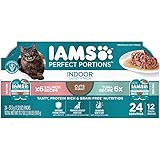
Overview: IAMS Perfect Portions revolutionizes convenience with its twin-pack tray design, delivering 24 pre-portioned servings in a 12-count package. Formulated for indoor adult cats, this grain-free* recipe features real salmon and tuna in gravy, supporting weight management through controlled portions rather than extreme calorie restriction. The easy-peel trays eliminate messy can openers and leftovers.
What Makes It Stand Out: The innovative twin-pack format provides exactly 1.3 ounces per serving—ideal for precise calorie control without measuring. This portion-control approach prevents overfeeding, a primary cause of feline obesity. The grain-free formulation appeals to modern dietary preferences, while real fish proteins satisfy obligate carnivore needs. Zero artificial flavors or preservatives align with clean-label trends, and the tray design offers unmatched convenience.
Value for Money: At approximately $0.35 per ounce, this is the priciest option, but the convenience factor justifies the premium. The 24 individual servings eliminate waste from uneaten canned food, potentially saving money long-term. While total weight is only 31.2 ounces, the portion control prevents overfeeding, making the cost-per-effective-meal more reasonable than it appears.
Strengths and Weaknesses: Strengths: Perfect portion control; convenient twin-pack trays; grain-free; real fish proteins; no artificial additives; zero mess Weaknesses: Very small servings; expensive per ounce; trace grain cross-contact risk; limited to fish flavors; not for large cats
Bottom Line: IAMS Perfect Portions is unmatched for convenience and portion control, ideal for busy owners of small-to-medium indoor cats needing weight management.
6. Sheba Perfect Portions Wet Cat Food Pate, Chicken Entree and with Sustainable Salmon Entree, Cat Food Wet Recipe Variety Pack, 2.6 oz. Twin-Pack Trays (6 Count, 12 Servings) (Pack of 2)

Overview: Sheba Perfect Portions offers a convenient solution for cat owners seeking portion-controlled meals. This variety pack includes chicken and sustainable salmon entrees in 2.6 oz twin-pack trays, totaling 12 servings across two boxes. The grain-free formula contains no fillers or artificial flavors, making it suitable for cats with sensitivities while providing complete nutrition for adult maintenance.
What Makes It Stand Out: The individual portion trays eliminate the need for can storage and measuring, with each serving staying fresh until opened. This reduces waste from uneaten refrigerated food and makes it ideal for single-cat households or precise feeding schedules. Made in the USA with globally sourced ingredients, the “Perfect Portions” design addresses common feeding frustrations while maintaining quality standards.
Value for Money: At approximately $0.50-$0.60 per serving, it’s competitively priced against premium wet foods. While bulk cans may offer lower per-ounce costs, the convenience factor justifies the slight premium. You’re paying for packaging innovation that reduces spoilage and mess, making it cost-effective for busy owners who prioritize portion accuracy over absolute lowest price.
Strengths and Weaknesses:
- Strengths: Convenient portion control, grain-free formula, no artificial fillers, variety pack options, stays fresh until opened, easy to serve without utensils
- Weaknesses: Excess plastic packaging creates environmental concerns, slightly higher cost per ounce than traditional cans, trace allergen disclaimer due to cross-contact, portions may be too small for larger or multi-cat households
Bottom Line: Perfect for busy owners prioritizing convenience and portion control. The trade-off is environmental impact from packaging waste. Ideal for single-cat homes or as a supplement to dry food, but eco-conscious buyers may prefer recyclable cans.
7. Blue Buffalo Wilderness High Protein, Natural Adult Pate Wet Cat Food Variety Pack, Chicken, Salmon, Duck 3-oz Cans (12 Count- 4 of Each Flavor)

Overview: Blue Buffalo Wilderness delivers a protein-packed variety pack featuring chicken, salmon, and duck in smooth pate form. This grain-free formula comes in twelve 3-oz cans, with four of each flavor, designed to satisfy obligate carnivores with high-quality animal proteins as the primary ingredients for adult cat maintenance.
What Makes It Stand Out: The Wilderness line emphasizes ancestral diets with real meat as the first ingredient. Unlike many competitors, it contains no chicken by-product meals, corn, wheat, or soy. The natural recipe is enhanced with vitamins and minerals without artificial preservatives, appealing to health-conscious pet parents seeking clean nutrition without compromising on protein content.
Value for Money: Positioned in the premium tier at roughly $1.50-$1.75 per can, it costs more than grocery store brands but less than ultra-premium options. The multi-protein variety prevents flavor fatigue and helps identify preferences before committing to bulk purchases, ultimately reducing waste from rejected flavors and making it economical for discerning cats.
Strengths and Weaknesses:
- Strengths: High protein content, three quality protein sources, grain-free, no by-products or artificial additives, smooth pate texture, trusted brand reputation
- Weaknesses: Premium price point, some cats dislike pate texture, strong odor typical of high-protein foods, may cause digestive upset during dietary transitions, cans require can opener
Bottom Line: An excellent choice for owners seeking high-protein, grain-free nutrition from a trusted brand. The variety pack is perfect for discerning cats. Worth the investment for quality ingredients, though the pate texture won’t suit every feline preference.
8. Purina ONE Natural Weight Control Wet Cat Food, Ideal Weight Tender Salmon Recipe - (24) 3 oz. Pull-Top Cans

Overview: Purina ONE Natural Weight Control offers a targeted solution for cats needing weight management. This 24-pack of 3-oz cans features tender salmon in savory sauce, providing 100% complete nutrition with reduced calories while maintaining high protein for muscle support and overall health in adult cats.
What Makes It Stand Out: Formulated specifically for weight control, this recipe includes omega-6 fatty acids for skin and coat health. The tender texture with sauce appeals to cats who prefer moist, meaty pieces over pate. As a veterinarian-recommended brand manufactured in Purina-owned US facilities with quality checks, it carries professional credibility and safety assurance.
Value for Money: Priced in the mid-range at about $1.00-$1.25 per can, it offers excellent value for a specialized formula. The 24-pack bulk sizing reduces per-unit cost compared to smaller quantities, making it economical for long-term weight management programs without the premium pricing of therapeutic veterinary diets.
Strengths and Weaknesses:
- Strengths: Weight management formulation, real salmon as first ingredient, omega-6 fatty acids, veterinarian recommended, tender texture, pull-top cans for convenience, quality manufacturing standards
- Weaknesses: Not grain-free (contains wheat gluten), limited single flavor option may cause boredom, sauce may be too rich for some cats, requires strict portion discipline to be effective
Bottom Line: A reliable, vet-backed choice for weight-conscious owners. The tender texture appeals to many cats, but those needing grain-free should look elsewhere. Effective when combined with proper portion control and exercise.
9. I and love and you Wet Cat Food - Ninja Cat Jiu Jit Stew Variety Pack - Chicken, Salmon, Tuna, Grain Free, Filler Free, 3oz Pack of 12 Cans

Overview: “I and love and you” Ninja Cat Jiu Jit Stew offers a premium, grain-free option in a chunky stew format. This 12-can variety pack features chicken, salmon, and tuna in rich gravy, targeting cats who prefer textured meals over smooth pates while providing hydration benefits through its broth-based formula.
What Makes It Stand Out: The stew consistency delivers a hydration boost through flavorful broth, addressing many cats’ low water intake. With single protein sources and no grains or fillers, it prioritizes nutritional density over cost-cutting ingredients. The quirky branding reflects the company’s transparent, pet-first philosophy and commitment to clean labels.
Value for Money: At approximately $1.75-$2.00 per can, this sits in the premium tier. You’re investing in high-quality ingredients without rice or corn bulkers. While pricier than mass-market options, the nutritional philosophy and stew format justify the cost for discerning owners who prioritize ingredient integrity over budget pricing.
Strengths and Weaknesses:
- Strengths: Stew texture provides hydration, grain-free and filler-free, real meat as first ingredient, variety pack, novel proteins, transparent ingredient sourcing, supports urinary health
- Weaknesses: Premium pricing, smaller 3oz cans may not satisfy larger appetites, stew format can be messy to serve, limited retail availability, quirky name may not appeal to all consumers
Bottom Line: Ideal for cats who dislike pate or need extra hydration. The ingredient quality is excellent, but the premium price requires budget consideration. Best as a rotational diet supplement or for cats with specific texture preferences and urinary health needs.
10. Royal Canin Feline Care Nutrition Weight Care Adult Thin Slices in Gravy Cat Food, 3 oz (Pack of 24)

Overview: Royal Canin Feline Weight Care delivers clinically formulated nutrition for cats needing weight management. This 24-pack of 3-oz cans features thin slices in gravy, designed for cats with weight control needs through precise nutrient ratios and specialized ingredients backed by veterinary research.
What Makes It Stand Out: Backed by internal studies showing over 90% of cats losing weight within two months, this food includes L-carnitine for fat metabolism and an adapted protein content to preserve muscle mass. The ideal fiber blend promotes satiety, helping cats feel full while consuming fewer calories, and the thin slices in gravy texture maintains palatability during calorie restriction.
Value for Money: As a veterinary therapeutic diet, it commands premium pricing around $1.75-$2.00 per can. While expensive compared to standard wet foods, the scientifically validated formulation and specialized ingredients justify the cost for cats with obesity risks. Bulk packaging provides slight savings over individual can purchases.
Strengths and Weaknesses:
- Strengths: Clinically proven weight loss results, L-carnitine for metabolism, high palatability, fiber blend for satiety, trusted veterinary brand, pairs with dry food options, precise calorie control
- Weaknesses: Premium price, requires veterinary consultation for best results, not suitable for underweight cats, contains by-products (common in veterinary diets), limited flavor variety, may need gradual introduction
Bottom Line: The gold standard for feline weight management. Best used under veterinary guidance for cats needing significant weight loss. The proven results and scientific formulation justify the premium for health-focused owners committed to their cat’s weight journey.
Understanding Feline Obesity and the Role of Wet Food
Why Wet Food is Superior for Weight Management
Wet cat food isn’t just a tasty treat—it’s a strategic tool for weight loss that works with your cat’s biology. The high moisture content (typically 75-85%) creates volume without calories, allowing your cat to eat a physically satisfying portion while consuming fewer calories. This addresses the psychological aspect of dieting that many owners overlook: cats need to feel full. A water-rich meal stretches the stomach, triggering satiety signals to the brain in ways that a small, dense portion of dry food simply cannot replicate.
Moreover, the manufacturing process of wet food naturally lends itself to higher protein and lower carbohydrate formulations. While dry kibble requires starches as binding agents, wet food can maintain its structure without these calorie-laden fillers. This macronutrient profile aligns perfectly with your cat’s obligate carnivore physiology, preserving lean muscle mass while encouraging the body to burn stored fat for energy.
The Science Behind Obesity in Cats
Feline obesity isn’t a character flaw—it’s a metabolic disease. When cats consume more calories than they expend, excess energy gets stored as adipose tissue. But here’s the critical part: fat tissue isn’t inert. It secretes inflammatory cytokines that create a state of chronic low-grade inflammation throughout the body. This inflammation interferes with insulin signaling, damages joint cartilage, and even affects appetite regulation, creating a vicious cycle where overweight cats actually feel hungrier.
Indoor lifestyles compound the problem. A cat that sleeps 18 hours a day and engages in brief bursts of activity may need as little as 180-200 calories daily. Yet many standard cat foods pack 400+ calories per cup, making portion control incredibly challenging. Understanding this metabolic reality is crucial because it explains why simply “feeding less” of a regular food often fails—your cat ends up malnourished, miserable, and prone to begging or scavenging.
Key Nutritional Principles for Weight Loss in Cats
Calorie Density: The Foundation of Portion Control
The single most important number on any weight management cat food is the calorie density, expressed as kcal per can or per 100 grams. Premium weight management formulas typically range from 60-90 kcal per 3-ounce can, compared to 100-130 kcal in standard wet foods. This lower density allows for larger portion sizes that physically fill the bowl and your cat’s stomach.
Don’t confuse “low calorie” with “low quality.” The best formulations achieve calorie reduction by increasing water and fiber while maintaining protein concentration. This means your cat can eat a substantial portion—often 1.5 to 2 cans per day depending on target weight—without exceeding their energy needs. Always calculate portions based on your cat’s ideal weight, not their current weight, or you’ll simply maintain their obese status.
Protein Quality and Quantity: Preserving Lean Muscle Mass
During weight loss, cats must consume high levels of quality protein—minimum 40% dry matter basis, with premium formulas reaching 50-55%. Why so high? Cats metabolize protein differently than dogs or humans. When calorie intake drops, their bodies will catabolize muscle tissue for energy if dietary protein is inadequate. This creates the disastrous scenario where the scale shows weight loss, but the cat has lost muscle, not fat.
Look for named animal proteins (chicken, turkey, salmon) as the first several ingredients. The term “meal” after the protein source (e.g., chicken meal) isn’t necessarily bad—it simply means dehydrated meat concentrate with protein levels around 65%. Avoid vague terms like “meat by-products” or “animal digest,” which indicate variable quality. The amino acid profile matters too: taurine, methionine, and lysine should be present in adequate amounts to support muscle maintenance and metabolic function.
Fiber Content: Satiety Without Excess Calories
Strategic fiber inclusion is what separates mediocre weight management foods from exceptional ones. Soluble fibers like guar gum or inulin form a gel-like substance in the stomach, slowing gastric emptying and prolonging fullness. Insoluble fibers like cellulose add bulk without digestible calories, physically filling intestinal space.
The sweet spot is 2-4% crude fiber on a dry matter basis. Too little, and you miss the satiety benefits. Too much, and you risk reduced nutrient absorption and excessive stool volume. Some innovative 2026 formulations now include prebiotic fibers that feed beneficial gut bacteria, which emerging research suggests may influence weight regulation through the gut-brain axis.
Moisture Content: Hydration and Volume Eating
Beyond simple volume, high moisture content supports kidney function and urinary tract health—critical concerns in overweight cats who may be predisposed to urinary issues. The water in wet food also has a thermogenic effect, meaning your cat’s body burns slightly more calories warming the food to body temperature.
For cats with lower urinary tract disease or a history of crystals, the increased water intake from wet food can be therapeutic, diluting urine and reducing crystal formation risk. This dual benefit—weight management plus urinary support—makes wet food an especially smart choice for obese cats with concurrent health issues.
Decoding Cat Food Labels: What to Look For
Guaranteed Analysis: Beyond the Numbers
The guaranteed analysis panel provides minimums and maximums for key nutrients, but it’s reported on an “as fed” basis, which includes water. To compare foods accurately, you must convert to dry matter basis. Here’s the quick math: subtract the moisture percentage from 100 to get dry matter, then divide the nutrient percentage by the dry matter percentage.
For example, a food with 80% moisture and 10% crude protein contains 50% protein on a dry matter basis (10 ÷ 20 = 0.50). This conversion reveals that many “high protein” claims are misleading when water content is high. For weight management, target foods with at least 40% protein and no more than 15% carbohydrates on a dry matter basis.
Ingredient List Hierarchy: Quality Over Quantity
Ingredients are listed by weight before cooking, so the first five ingredients constitute the bulk of the food. In premium weight management formulas, you should see multiple named animal proteins, followed by water sufficient for processing, and then perhaps a small amount of plant-based fiber or functional ingredients.
Be wary of ingredient splitting—where corn might appear as “corn meal,” “corn gluten,” and “corn flour,” pushing meat ingredients higher on the list when corn is actually the primary ingredient. Also, watch for excessive plant proteins like pea protein or potato protein, which boost the protein number on the label but lack the complete amino acid profile cats require.
AAFCO Statements: Complete and Balanced Nutrition
The Association of American Feed Control Officials (AAFCO) statement tells you whether a food is complete and balanced for a specific life stage. For weight management, you want to see “formulated to meet the nutritional levels established by the AAFCO Cat Food Nutrient Profiles for maintenance of adult cats” or “for all life stages.”
Better yet, look for foods that have undergone feeding trials—indicated by “animal feeding tests using AAFCO procedures substantiate that this product provides complete and balanced nutrition.” While not perfect, feeding trials provide real-world validation that cats can thrive on the food long-term, not just survive on paper.
Feeding Guidelines: Why They’re Just a Starting Point
Those feeding charts on the back of cans? They’re based on average cats with average activity levels. Your obese cat is anything but average. Start with the recommendation for their ideal weight, then adjust by 10-15% based on body condition, age, and activity level.
Monitor your cat’s weight weekly using a digital scale (a baby scale works perfectly). If they’re not losing 1-2% of body weight per week, reduce portions by another 10%. Rapid weight loss in cats can trigger hepatic lipidosis, a life-threatening liver disease, so patience is essential. The goal is steady, sustainable loss over 6-12 months.
Essential Features of Premium Weight Management Wet Foods
High Protein, Low Carbohydrate Formulation
The evolutionary diet of cats consists of roughly 52% protein, 46% fat, and just 2% carbohydrates. Modern weight management formulas should approximate this macronutrient distribution. Carbohydrates above 10% dry matter basis are unnecessary for cats and simply provide cheap calories.
In 2026, the best formulations have embraced grain-free philosophies not as a marketing gimmick, but as a biological necessity. However, “grain-free” doesn’t mean “carb-free”—potatoes, peas, and tapioca can add just as many carbs. Look for foods where the carbohydrate calculation (100 - protein - fat - fiber - moisture - ash) is under 15% on a dry matter basis.
Added L-Carnitine: The Fat-Burning Catalyst
L-Carnitine is a vitamin-like compound that transports fatty acids into mitochondria where they’re burned for energy. Multiple studies have demonstrated that supplementing cat diets with 250-500mg/kg L-Carnitine enhances fat metabolism and helps preserve lean muscle during calorie restriction.
While not mandatory, its inclusion signals a scientifically-formulated weight management product. L-Carnitine is particularly beneficial for cats with compromised liver function or those who have struggled with weight loss plateaus. The compound is safe, with no known toxicity in cats, making it a valuable addition to any serious weight loss formulation.
Omega Fatty Acids: Anti-Inflammatory Benefits
Obesity creates a pro-inflammatory state, and omega-3 fatty acids from fish oil (EPA and DHA) help counteract this. These fats don’t directly cause weight loss, but they improve insulin sensitivity, reduce joint inflammation, and support the skin and coat that may become dull during dieting.
Look for foods that specify the source (anchovy oil, salmon oil) rather than generic “fish oil.” The ideal omega-6 to omega-3 ratio should be between 5:1 and 10:1. Some premium formulas now include novel sources like algal oil for cats with fish sensitivities, providing DHA without the protein triggers.
Joint Support Ingredients: Mobility Matters
Extra weight crushes joints. Overweight cats frequently develop osteoarthritis, which reduces their willingness to move, creating a downward spiral of inactivity and further weight gain. Forward-thinking weight management foods now include glucosamine and chondroitin sulfate at therapeutic levels (around 300mg/kg and 250mg/kg respectively).
These ingredients support cartilage repair and reduce inflammation, potentially increasing your cat’s comfort and activity level. While not a substitute for pain medication in advanced cases, they represent a proactive approach to the musculoskeletal consequences of obesity.
Avoiding Common Pitfalls in Weight Management Diets
The “Light” Label Trap
The term “light” or “lite” on pet food labels is legally defined as containing no more than 950 kcal/kg for wet food. However, this standard is laughably broad—a “light” food could still pack 90 calories per 3-ounce can, which is hardly low-calorie for a small cat. Always check the actual calorie content, not just the marketing claim.
Some brands use “light” to describe texture rather than calories, creating further confusion. The term “weight management” or “healthy weight” isn’t legally regulated, making it even more critical to evaluate the nutritional panel and ingredient list rather than trusting front-of-package claims.
Fillers and By-products: Hidden Calorie Sources
Fillers like corn, wheat, and soy add calories without nutritional value for cats. While not toxic, they displace animal proteins and can trigger food sensitivities in some individuals. By-products aren’t inherently evil—organ meats are nutritious—but vague “meat by-products” could include anything from feathers to hooves, with variable digestibility.
In weight management formulas, every calorie must count toward nutrition. There’s no room for ingredients that simply take up space. Premium foods use whole, named ingredients with high biological value, ensuring your cat extracts maximum nutrition from minimum calories.
Artificial Additives: Unnecessary Extras
Artificial colors, flavors, and preservatives add nothing but potential problems. Cats don’t care what color their food is, and natural preservatives like mixed tocopherols (vitamin E) are perfectly effective. Some artificial preservatives like BHA and BHT have been linked to health concerns in animal studies, though the evidence isn’t conclusive.
During weight loss, your cat’s liver is already working hard processing stored fat. Adding unnecessary chemical compounds creates additional metabolic burden. The cleanest formulas have ingredient lists that read like a recipe, not a chemistry experiment.
Inconsistent Texture Preferences
Cats are notoriously texture-sensitive, and nothing derails a diet faster than a cat who refuses to eat the new food. Some weight management formulas sacrifice texture for nutrition, creating pâtés that are too dry or chunks in gravy where the gravy is mostly starch and water.
Before committing to a case of food, purchase individual cans or variety packs to test acceptance. Look for foods with consistent texture between batches—quality control issues that change texture between purchases can trigger rejection. Remember, the best weight management food is the one your cat will actually eat.
Transitioning Your Cat to a Weight Management Diet
The 7-10 Day Transition Protocol
Never switch foods abruptly. A sudden diet change can cause gastrointestinal upset and create a negative association with the new food. Start with 75% old food and 25% new food for 2-3 days, then move to 50/50, then 25/75, before reaching 100% new food.
For extremely finicky cats, extend this to 14 days. Mix thoroughly to prevent selective eating, and warm the food slightly to enhance aroma. If your cat refuses the new food entirely, you may need to try a different flavor profile or texture. Some cats respond better to fish-based formulas initially, which can then be rotated to poultry once acceptance is established.
Managing Multi-Cat Household Challenges
Feeding a weight management diet to one cat while others maintain normal weight requires strategy. Microchip-activated feeders are the gold standard, allowing only the designated cat to access the special food. If that’s not feasible, feed cats in separate rooms with supervised meal times—15 minutes twice daily.
Never leave weight management food out for free feeding, as your other cats may consume it and lose unintended weight. Conversely, ensure your overweight cat cannot access the other cats’ food. This may require creative solutions like baby gates, elevated feeding stations, or scheduled play sessions that distract while the other cat eats.
Dealing with Food Aversion and Picky Eaters
Cats who’ve been free-fed dry food often develop strong texture and flavor preferences. If your cat refuses wet food entirely, start by adding a teaspoon of wet food to their kibble as a topper, gradually increasing the ratio over weeks. Some cats respond to “hunger therapy”—removing all food for 12-24 hours (never longer) to increase motivation, though this should be done under veterinary supervision.
Consider flavor enhancers like a splash of tuna water (not oil) or a pinch of nutritional yeast. These add minimal calories while making food more appealing. If aversion persists, your veterinarian may prescribe an appetite stimulant for the transition period.
Portion Control and Feeding Strategies
Measuring vs. Free Feeding: Establishing Routine
Free feeding is the enemy of weight management. Cats are natural hunters who evolved to eat multiple small meals throughout the day, not graze continuously. Switch to measured, scheduled feeding—typically two to three meals daily. Use a digital kitchen scale to weigh food rather than estimating with measuring cups, as can shapes and packing density create huge variations.
For cats accustomed to grazing, divide the daily portion into 3-4 smaller meals initially. This prevents overwhelming their stomach while maintaining the routine of scheduled eating times. Remove any uneaten food after 15-20 minutes to reinforce that mealtime is now.
Treat Management: The Hidden Calorie Culprit
Treats should comprise no more than 10% of daily calories, which for a dieting cat might mean just 15-20 calories. That’s equivalent to a few pieces of kibble or a thumbnail-sized portion of wet food. Many commercial treats are calorie-dense bombs that undo an entire day’s calorie restriction.
Replace commercial treats with low-calorie alternatives: a single freeze-dried chicken liver (about 3 calories), a green bean slice, or even a 1-calorie dental treat. Better yet, use play as a reward. Most cats value interactive play with their owner more than food treats, and it burns calories to boot.
Scheduled Feeding Times: Creating Predictability
Cats thrive on routine. Feed at the same times daily, ideally correlating with your own meals to create a household rhythm. This predictability reduces anxiety-related begging and helps regulate metabolism. Morning and evening feedings work well for most schedules.
If you work long hours, consider an automatic feeder that dispenses precise portions at set times. This removes human error and prevents the “guilt feeding” that often sabotages weight loss efforts. The feeder becomes the food source, not you, which can actually reduce begging behavior.
Monitoring Progress and Adjusting the Plan
Body Condition Scoring: Your Hands-On Tool
Learn to body condition score (BCS) your cat using the 9-point scale. At ideal weight (BCS 5/9), you should feel ribs with slight fat covering, see a visible waist from above, and notice a slight abdominal tuck from the side. At BCS 8/9 (obese), ribs are difficult to feel under thick fat, there’s no waist, and the abdomen sags.
Practice BCS weekly, taking photos from above and the side in good lighting. These visual records are more valuable than scale weight alone, as they reveal changes in body composition. Many owners report their cat “looks thinner” even when the scale hasn’t budged—this usually means muscle is being preserved while fat is lost.
Regular Weigh-Ins: Tracking Trends
Weigh your cat weekly on the same scale at the same time of day. A digital baby scale accurate to 0.1 pounds is ideal. Expect weight loss of 1-2% of body weight per week—about 0.2-0.4 pounds for a 20-pound cat. Faster loss risks hepatic lipidosis.
Create a simple spreadsheet or use a pet health app to track weight over time. Look for trends, not daily fluctuations. If weight plateaus for three weeks, reduce portions by 10% and increase play activity. If weight drops too quickly, increase food by 10%. Small, data-driven adjustments prevent dramatic swings.
When to Consult Your Veterinarian
Schedule a veterinary recheck every 4-6 weeks during active weight loss. Your vet can perform body composition analysis, check for underlying metabolic disorders like hypothyroidism (rare in cats but possible), and adjust the plan based on progress.
Seek immediate veterinary attention if your cat shows signs of lethargy, jaundice, or complete appetite loss—these could indicate hepatic lipidosis. Also consult your vet if weight loss stalls despite strict adherence to the plan, as prescription weight loss medications may be warranted in challenging cases.
The Cost-Value Equation: Investing in Health
Price Per Calorie vs. Price Per Can
A $2 can containing 60 calories is actually more expensive than a $3 can with 100 calories when calculated by price per calorie. Always compare foods based on cost per 100 kcal, not cost per ounce. During weight loss, you’re feeding fewer total calories, so the daily cost difference between premium and budget options is often smaller than expected.
Consider the long-term savings: preventing diabetes saves thousands in insulin and monitoring costs. Avoiding joint surgery spares both expense and suffering. Premium weight management food is preventive medicine, not just sustenance.
Subscription Services and Bulk Buying
Many premium brands offer 10-15% discounts through subscription services. This ensures consistency—no emergency runs when you run out—and often includes free shipping. For cats with stable preferences, buying cases of 24 cans reduces per-unit cost significantly.
However, don’t sacrifice freshness for savings. Once opened, wet food oxidizes and loses palatability. If your cat eats only half a can per meal, the savings from bulk buying evaporate if they reject food that’s been refrigerated too long. Balance cost with your cat’s eating habits.
Prescription vs. Over-the-Counter Options
Prescription weight management diets offer precise calorie control and therapeutic ingredients but require veterinary authorization and cost 30-50% more than over-the-counter options. For cats needing to lose over 30% of body weight or those with concurrent health issues, the precision is worth the premium.
Over-the-counter weight management foods have improved dramatically, with many matching prescription formulations in protein and calorie content. For cats needing to lose 10-20% of body weight, these are often perfectly adequate. Discuss with your vet which tier makes sense for your cat’s specific situation.
Sustainability and Ethical Considerations
Protein Sourcing and Environmental Impact
The pet food industry faces scrutiny over its environmental footprint. Look for brands that use ethically sourced proteins—free-range poultry, sustainably caught fish, or even novel proteins like insect meal, which offers complete amino acid profiles with dramatically lower resource requirements.
Some 2026 formulations now include plant-based proteins from algae or fermented yeast as partial replacements for animal protein. While cats cannot be vegan, these innovative ingredients reduce the overall animal protein requirement without compromising nutrition, offering a more sustainable middle ground.
Packaging Waste: Eco-Friendly Alternatives
Traditional aluminum cans are highly recyclable but energy-intensive to produce. Newer pouch formats use less material but often combine plastics and aluminum, making them difficult to recycle. Some brands now offer tetra pak cartons or even refillable container programs at specialty pet stores.
Consider the full lifecycle impact. A food shipped from across the globe in recyclable packaging may have a larger carbon footprint than a locally-produced food in less eco-friendly packaging. Transparency from manufacturers about their sustainability initiatives helps you make informed choices aligned with your values.
Frequently Asked Questions
1. How quickly should my overweight cat lose weight? Aim for 1-2% of body weight per week, which translates to about 0.2-0.4 pounds for a 20-pound cat. Faster weight loss risks hepatic lipidosis, a potentially fatal liver disease. Slow and steady wins the race, with most cats needing 6-12 months to reach ideal weight.
2. Can I just feed less of my cat’s regular wet food instead of buying a weight management formula? This approach often backfires. Regular foods aren’t formulated for calorie restriction, so feeding less also reduces protein and essential nutrients, risking muscle loss and nutritional deficiencies. Weight management formulas maintain nutrient density while reducing calories.
3. My cat cries constantly for food on the new diet. Is he starving? Vocalization usually reflects habit and attention-seeking rather than true hunger. Ensure you’re feeding adequate calories for his ideal weight, provide frequent small meals, and increase play to distract him. If crying persists beyond two weeks, consult your vet to rule out medical issues.
4. Are grain-free weight management foods better? Not necessarily. “Grain-free” doesn’t mean low-carb or low-calorie. Many replace grains with potatoes or peas that are equally high in carbohydrates. Focus on macronutrient profiles rather than marketing terms—high protein and low carbs matter more than grain content.
5. How do I calculate the right portion size? Determine your cat’s ideal weight in pounds, multiply by 20-25 kcal per pound for weight loss, then divide by the calories per can. For a 12-pound cat needing to lose weight: 12 × 22 = 264 kcal/day. If the food has 80 kcal/can, feed 3.3 cans daily, split into 2-3 meals.
6. Can treats be part of a weight management plan? Yes, but limit treats to 10% of daily calories—about 15-20 calories for a dieting cat. Choose low-calorie options like freeze-dried meat or single-ingredient treats. Better yet, use play, grooming, or affection as rewards instead of food.
7. Why has my cat’s weight loss plateaued? Plateaus are normal after 4-6 weeks as metabolism adjusts. First, ensure no one else is feeding the cat. Then, reduce portions by 10% or increase play activity. If weight remains stagnant for 3+ weeks, consult your vet to rule out metabolic issues.
8. Is wet food alone enough, or does my cat need kibble too? Wet food alone is completely adequate and often superior for weight management. The myth that cats “need” dry food for dental health has been debunked—most cats swallow kibble whole, and the carbohydrates actually promote dental disease. Quality wet food provides complete nutrition with better hydration.
9. My cat refuses to eat the weight management food. What should I try? First, warm the food to body temperature to enhance aroma. Try a different texture (pâté vs. chunks) or protein source. Mix in a tiny amount of tuna water or nutritional yeast. If refusal persists beyond 48 hours, try a different brand or ask your vet about appetite stimulants.
10. How do I maintain my cat’s weight after they reach their goal? Transition to a maintenance wet food with slightly higher calories, or continue the weight management food but increase portions by 15-20%. Continue weekly weigh-ins for at least 3 months to find the precise maintenance amount. Ongoing portion control and active play remain essential for life.
See Also
- 10 Best Wet Cat Food for Overweight Cats Needing Weight Management in 2026
- 10 Essential Weight Management Wet Cat Food Every Overweight Cat Needs in 2026
- 10 Best Wet Cat Food for Weight Management in Overweight Felines in 2026
- 10 Wet Cat Food That Help with Weight Management in 2026
- 10 Expert-Recommended Grain-Free Wet Cat Food for Weight Management in 2026